
FRAME
The Leader as Architect
Strategy without structure is just ambition. REFRAMICA on why the best leaders don't make every decision — they design the framework that makes good decisions inevitable.
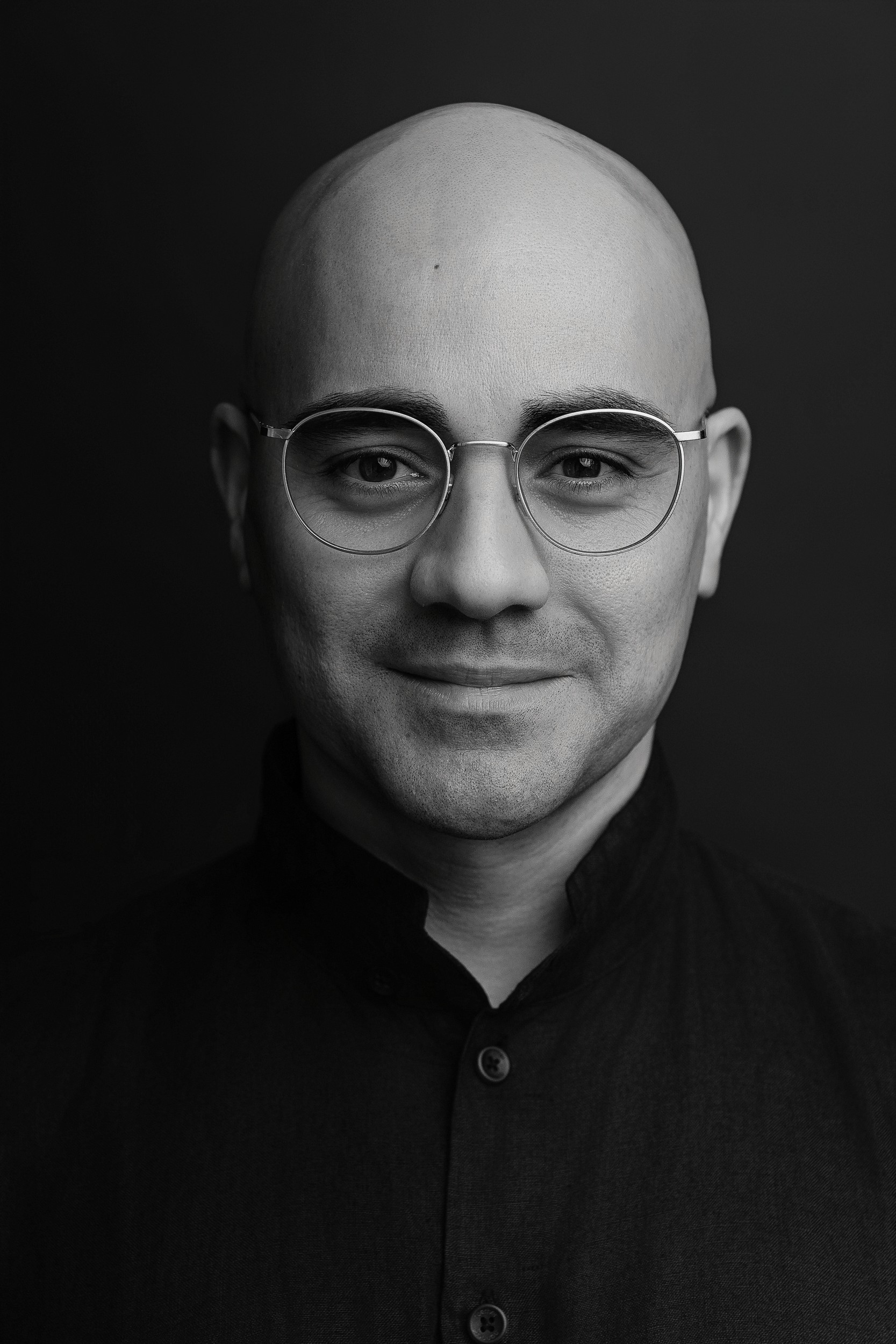
Oktay Tannert-Yaldiz

Introduction
There is a leadership fantasy that dies hard.
The fantasy of the decisive leader. The one who sees what others don't, steps into the room at the critical moment, and makes the call that changes everything. Bold. Clear. Singular.
It is a compelling image. It is also, in the context of complex organizational transformation, almost entirely wrong.
Not because decisiveness doesn't matter. It does. But because the leaders who create the most lasting change are not primarily decision-makers. They are architects. And the difference between those two things determines, more than almost anything else, whether a transformation succeeds or collapses under its own weight.
What an architect actually does
An architect doesn't build the building. An architect designs the structure within which the building becomes possible — and within which everyone who works on it knows, without constant instruction, what they are building toward and how their contribution fits into the whole.
That is exactly what strategic leadership requires in transformation.
Not the leader who makes every call — but the leader who builds the framework within which the right calls get made. Not the one who holds all the answers — but the one who designs the conditions under which good answers can emerge consistently, at every level of the organization, without needing to run everything back to the top.
This distinction sounds philosophical. It isn't. It has direct, practical consequences for how teams operate, how fast organizations move, and whether transformation actually sticks or quietly dissolves once the initial momentum fades.
The cost of the decision-maker model
Most leadership development still optimizes for the decision-maker. Be decisive. Move fast. Show confidence. Own the outcome.
These are not bad qualities. But when applied to transformation — which is inherently complex, inherently uncertain, and inherently distributed across an organization — they produce a specific and predictable failure mode: the bottleneck.
When every important decision has to travel upward to a single point of authority, organizations slow to a crawl exactly when they need to move fastest. When leaders signal, consciously or not, that they want to be consulted before anything significant happens, teams learn to wait. And waiting, in transformation, is its own form of failure.
McKinsey has documented this pattern clearly: organizations where decision-making authority is concentrated at the top consistently underperform in transformation initiatives — not because the decisions at the top are wrong, but because the decisions in the middle never get made at all.
The decision-maker model produces dependent teams. And dependent teams cannot carry a transformation forward.
What architectural leadership looks like in practice
It starts with a question that most leaders rarely ask explicitly: what do I want people to be able to decide without me?
That question reframes the entire job. Instead of asking: what decision should I make? An architectural leader asks: what framework do I need to build so that the people closest to this problem can make the right decision themselves?
This requires three things that are harder than they sound.
Clarity of direction. People can only make good autonomous decisions if they understand, deeply and genuinely, where the organization is going and why. Not the official strategy document — the actual conviction. The lived understanding that says: I know what we are trying to become, and I can use that knowledge to navigate the choices in front of me.
Most organizations have the first. Very few have the second.
Explicit principles, not implicit rules. Rules tell people what to do in situations that have already been anticipated. Principles give people the capacity to navigate situations that haven't. In transformation — which by definition moves into territory that hasn't been mapped — principles are not a soft substitute for rules. They are a harder and more valuable form of guidance.
The leader as architect defines the principles clearly, tests whether they are genuinely understood, and then — and this is the part that requires real courage — trusts people to apply them.
Permission to fail forward. Architectural leadership only works if the organization understands that not every decision will be right — and that the cost of a wrong decision made autonomously is, in most cases, far lower than the cost of an organization that has learned to wait for permission before acting.
This is not a license for recklessness. It is a recognition that in complex systems, learning happens through doing — and that the fastest path to better decisions is not more oversight, but better frameworks and faster feedback loops.
The strategic architecture of a transformation
When we work with organizations in transformation, one of the first things we do is map the decision architecture. Not the org chart — the actual decision architecture. Who decides what? Where do decisions get made? Where do they get stuck? Where does the organization pretend to empower people while quietly maintaining every meaningful lever of control at the center?
This mapping almost always reveals the same pattern: the stated values of the organization — autonomy, speed, empowerment — are in direct contradiction with the actual decision-making structure. People are told to own their work. And then asked to seek approval for every non-trivial move.
The gap between those two things is not a communication problem. It is an architecture problem. And it cannot be solved with a better all-hands presentation or a revised set of leadership principles.
It has to be redesigned.
That redesign is the real work of the leader as architect. It is less visible than the decisive moment in the boardroom. It generates fewer headlines than the bold strategic announcement. But it is the work that determines whether the organization that emerges from transformation is genuinely different — or just the same structure with a new coat of paint.
The hardest part
Here is what nobody tells you about architectural leadership: it requires giving up something that most leaders are not prepared to give up.
Control.
Not the illusion of control — most transformation leaders have already let go of that. But the comfort of control. The reassurance of being the one who knows. The identity that comes from being the person the room looks to when things get difficult.
Architectural leaders build systems that make themselves, in some ways, less necessary. They design structures that distribute judgment rather than concentrating it. They create conditions in which the organization can function well — and improve — even when the leader is not in the room.
That is not a diminishment of leadership. It is its highest expression.
Because the measure of a leader is not what happens when they are present. It is what happens when they are not.
First things first
Before you can build a strategic architecture, you have to know what you are building toward. Signal-reading comes first — understanding the landscape, identifying the forces at work, making sense of where the pressure is coming from and where the opportunity lies.
Architecture is the response to that understanding. It is how you translate signal into structure — how you build an organization that is not just reactive to change, but genuinely ready for it.
That is what we mean when we say that FRAME is where transformation begins.
This article is part of The Art of Transformation — REFRAMICA's ongoing series on strategy, narrative, and culture for organizations navigating change. FRAME is where transformation begins — turning complexity into clarity, and signals into strategic direction.