
ACT
Rituals over Processes
Most transformations fail not at launch, but six months later. REFRAMICA on why rituals — not processes — are what make cultural change irreversible.
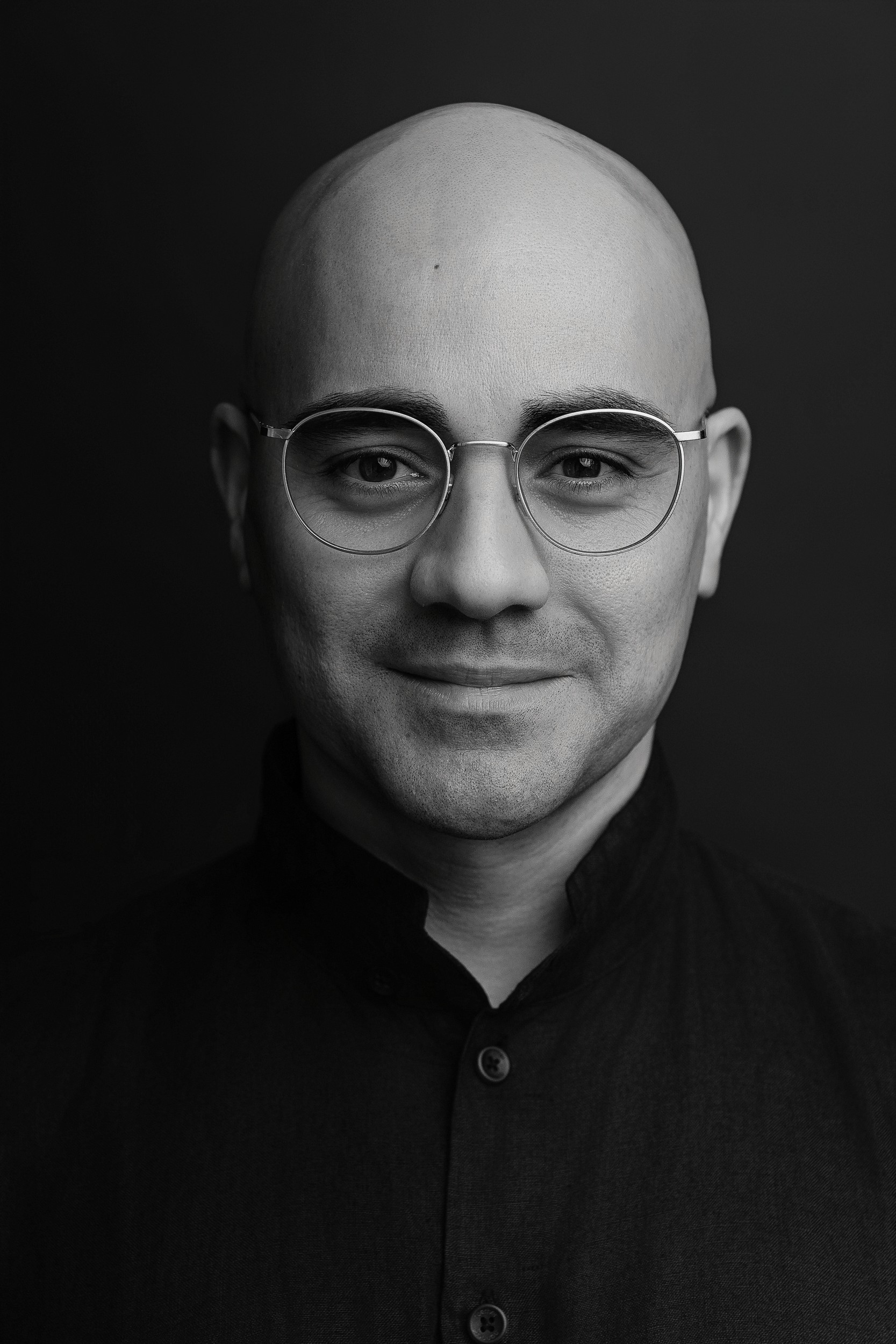
Oktay Tannert-Yaldiz

Introduction
Every organization that has ever attempted a transformation knows this feeling.
The strategy was sharp. The communication was clear. The launch was energizing. People nodded in the right meetings, the new values were printed on the walls, and the kickoff workshop generated exactly the kind of optimism that makes leadership teams feel like something real is about to happen.
And then, six months later, almost nothing had changed.
Not because people disagreed. Not because the direction was unclear. But because the Monday morning meeting still ran the same way it always had. Because the same voices still dominated the room. Because the promotion still went to the person who delivered the numbers — not the one who had embodied the new culture. Because when pressure came, as it always does, the organization defaulted to what it knew: the habits, the hierarchies, and the unwritten rules that had been in place long before any transformation was announced.
The strategy lived in the documents. The culture lived in the behavior. And behavior, in the end, always wins.
The process trap
When organizations want to embed change, they reach instinctively for the same tools: new processes, updated guidelines, revised org charts, restructured workflows, and refreshed KPIs.
These tools are not wrong. But they are insufficient.
Processes define what people should do. They don't determine what people actually do. And in the gap between those two things — between the prescribed and the practiced — culture lives.
Research shows that companies that actively shape their culture are five times more likely to achieve sustained transformation success. And yet only one in three senior leaders say their last change initiative achieved strong employee adoption. That gap — between the intentions of leadership and the reality on the ground — is not a process problem. It is a culture problem.
And culture cannot be processed into existence. It has to be lived into existence.
What a ritual is — and what it isn't
A ritual is not a routine. A routine is something you do automatically, without intention. A ritual is something you do with intention — an action that carries meaning beyond its practical purpose.
As workplace strategist Erica Keswin puts it: rituals go beyond their practical purpose, moving participants beyond transaction and into meaning. That distinction matters enormously in transformation. Because what organizations need is not more things for people to do — they already have too many of those. What they need are moments that remind people why they are doing what they are doing. Moments that signal: this is who we are, this is what we stand for, and this is how we move forward together.
That is what a ritual does. And it is something no process, no policy update, and no reorganization chart can replicate.
Why rituals work where processes fail
The answer lies in how human beings actually change.
Behavioral change does not happen through instruction. It happens through repetition, through social reinforcement, and through the gradual internalization of new ways of being. We don't change because we are told to. We change because the environment around us makes the new behavior feel natural, expected, and meaningful.
Neuroscientific research confirms that rituals reduce anxiety and increase emotional resilience — they create a sense of control even in situations where outcomes are deeply uncertain. In transformation, where uncertainty is the permanent condition, this matters more than almost anything else. Rituals give people a stable anchor in a changing world. They signal continuity in the midst of disruption. They say: even as everything changes, this stays the same — and this is who we are.
Research across psychology, anthropology, and organizational behavior consistently shows that rituals fulfill deep human needs for belonging, structure, and meaning — and that they can significantly reduce stress and improve performance in high-pressure environments.
This is not soft science. This is the hard architecture of how culture gets built and sustained.
Three kinds of rituals that embed transformation
01 — Transition rituals. These mark the passage from the old to the new. They honor what was, while creating a clear, shared moment of crossing into what comes next. A transformation without transition rituals asks people to leave behind the familiar with no ceremony — and that absence of acknowledgment breeds resistance, even when people intellectually support the change.
02 — Reinforcement rituals. These are the regular, repeated moments that keep the new way of working visible and valued. Not the annual strategy review — but the weekly team check-in that always starts with the same question. Not the town hall — but the monthly leadership moment where progress is named, celebrated, and connected back to the larger purpose. Repetition is not redundancy. In culture, repetition is meaning.
03 — Recovery rituals. These are the least talked about — and the most important. Every transformation hits walls. Teams lose momentum. People fall back into old patterns. Recovery rituals are the mechanisms that acknowledge this honestly, without blame, and re-establish the direction and energy of the movement. They signal: we are not failing — we are learning. And the learning is part of the journey.
The pilot as proof
Before rituals can scale, they need to be tested. And this is where the concept of the pilot becomes strategically essential — not as a technical experiment, but as a cultural one.
A well-designed pilot does three things at once. It tests whether the new way of working actually functions in practice. It generates the first evidence — the proof points that make the broader organization believe the transformation is real. And it creates the first community of people who have lived the change — who can speak to it from experience, not from a slide deck.
Cultural transformation requires identifying and reinforcing the specific behaviors that define the new way of working. These should be simple, actionable, and measurable. A pilot is the laboratory in which those behaviors get tested, refined, and made real before they are asked of the entire organization.
Organizations that skip the pilot and roll straight to scale almost always pay for it. Not because the strategy was wrong — but because they asked people to change everything at once, with no proof that it worked, and no community of believers to carry the message forward.
What this means for leadership
Embedding transformation is not a project management task. It cannot be delegated to a change management workstream, handed to HR, or resolved with a new performance framework.
It requires leaders who are willing to model the new behaviors — consistently, visibly, and especially when it is inconvenient. Because true cultural transformation begins with leadership. Leaders shape culture not through statements, but through consistent actions that reflect organizational values — even when those actions come at a cost.
It requires the patience to understand that culture moves at the speed of trust — and trust is built not through announcements, but through the accumulated weight of small, consistent, repeated actions over time.
And it requires the humility to recognize that the most powerful cultural forces in any organization are not the ones designed by leadership. The most enduring workplace rituals are the ones that emerge organically from the people themselves — adopted by leadership, amplified by the organization, but born from the lived experience of the people doing the work.
The best thing a leader can do is create the conditions in which those rituals can emerge — and then protect them fiercely when they do.
The end of transformation — and the beginning of culture
There is a moment in every successful transformation when you stop talking about the change and simply start living it.
When the new way of working is no longer new — it is just the way things are done here. When the values on the wall are the values in the room. When people don't need a process to tell them how to behave, because the culture already does.
That moment doesn't arrive through strategy alone. It doesn't arrive through communication alone. It arrives when all three are working together — when the direction is clear, the story is compelling, and the daily rituals of the organization make the new reality feel not just possible, but inevitable.
That is what transformation looks like when it actually works.
And that is what we mean by the art of it.
This article is part of The Art of Transformation — REFRAMICA's ongoing series on strategy, narrative, and culture for organizations navigating change. ACT is where transformation becomes real — turning intention into behavior, and behavior into culture.